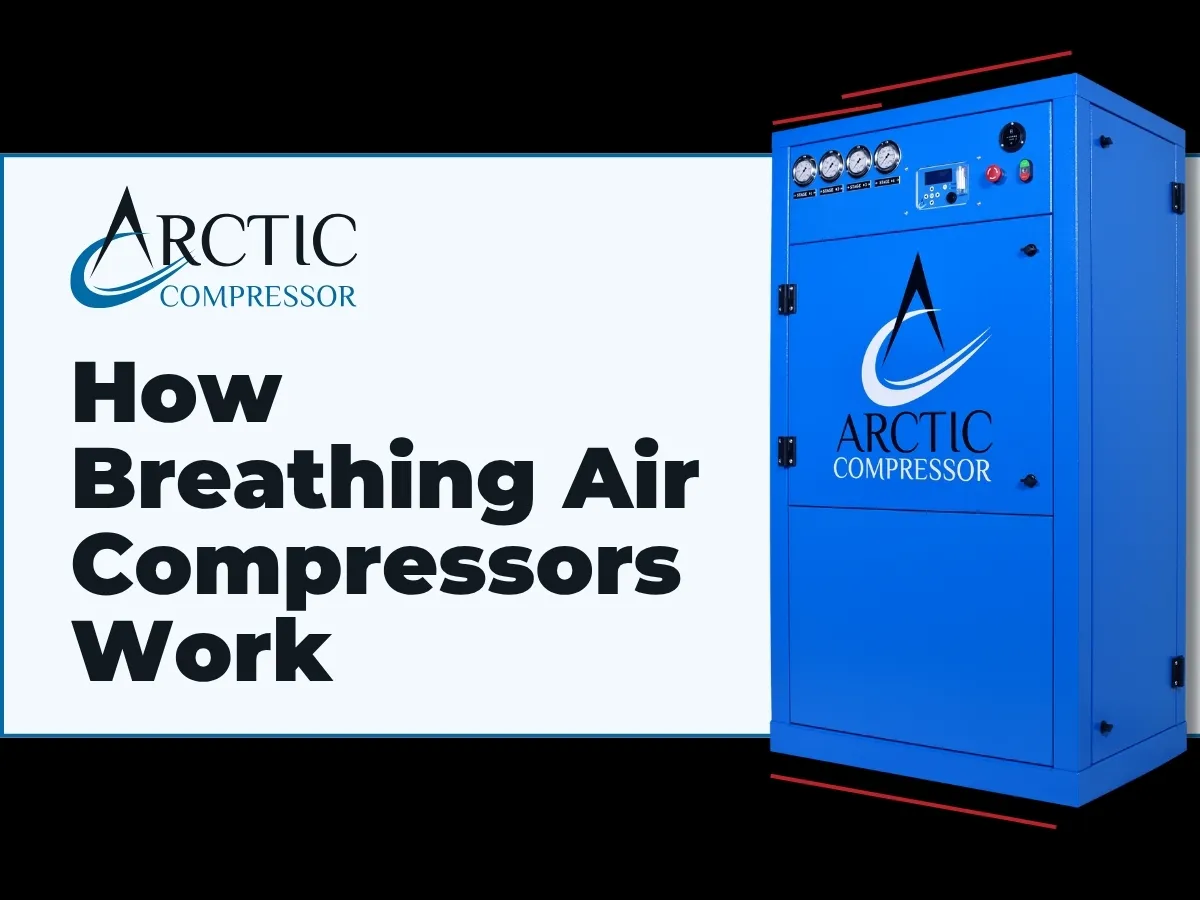
A breathing air compressor is a specialized high-pressure compressor. It provides breathable air for SCBA and SCUBA cylinders, operating at pressures over 5000 PSI. These compressors are essential for firefighters, emergency responders, and diving professionals who rely on a dependable, clean air supply to operate safely.
In this guide, we break down the components of how breathing air compressors work. We define each step from air intake to final delivery, providing key considerations and terminology for each.
The components of a breathing air compressor include:
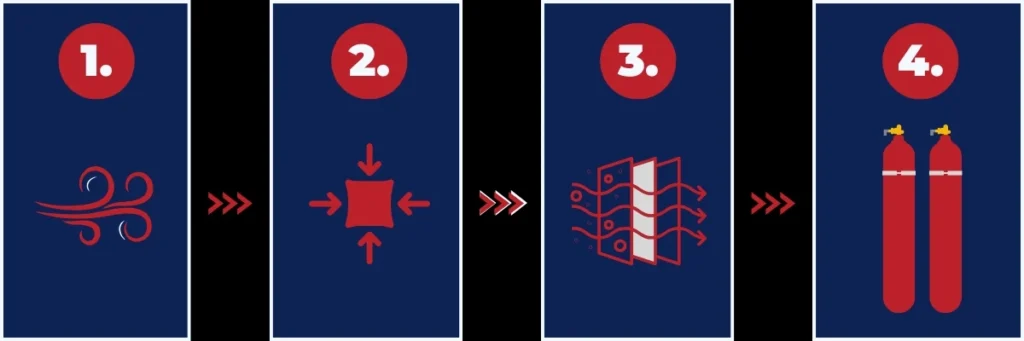
Put simply, a breathing air compressor works by:
Each stage is engineered to ensure the final air output meets rigorous purity and safety standards, such as CGA Grade E or NFPA 1989.
The process begins with air intake. Ambient, or regular, air is drawn through a filter that removes dust, pollen, and large particles. Placing your equipment for proper intake is critical. Drawing air near exhaust systems risks carbon monoxide contamination.
Next, the filtered air passes through one or more compression stages. Most breathing air compressors use several compression stages, typically between 3 and 5, to gradually increase pressure (often to 4500 – 7000 PSI).
Compressing air raises the air’s temperature and vapor capacity. Interstage or aftercoolers reduce the temperature, causing water to condense and be removed. By delivering cooler, denser air to storage cylinders, the system maximizes the mass of air per cylinder at a given pressure.
This is the most critical phase for safety. Specialized filtration cartridges remove carbon monoxide, hydrocarbons, water vapor, and oil mist.
After purification, the compressed breathing air is routed to air storage banks to be kept for use filling SCBA or SCUBA cylinders in Containment Fill Stations. The compressor and the compressed air it creates represent only one piece of a complete system. The combination of a compressor, fill station, and air storage components creates a full Breathing Air System.

While breathing air compressors are thoughtfully engineered units, making continuous monitoring available ensures safety and compliance.
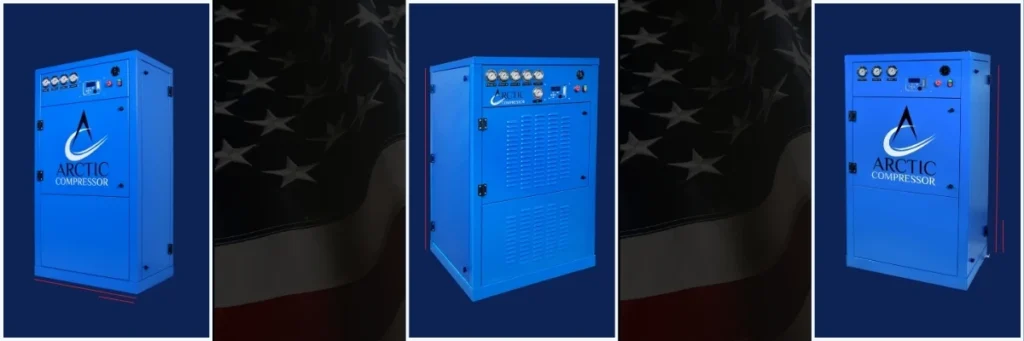
Arctic breathing air compressors deliver clean, reliable air for mission-critical operations. Engineered for durability and built to meet or exceed OSHA, NFPA 1989, and CGA Grade E standards.
Our compressors feature:
We offer both stationary and mobile solutions, with pressures up to 7000 PSI and customizable configurations for fire service, industrial, and government applications.
Breathing air compressors include advanced purification stages to remove contaminants, ensuring the air is safe for human respiration – unlike standard air compressors.
Common standards include OSHA Grade D and NFPA 1989. Arctic Compressor units meet or exceed CGA Grade E and NFPA 1989 standards.
Filter replacement varies by usage and environment. Your Arctic maintenance schedule will outline exactly when to service your unit.
Yes, through the use of catalytic converters or specialized filter cartridges. Sensors are often used to verify safe levels.