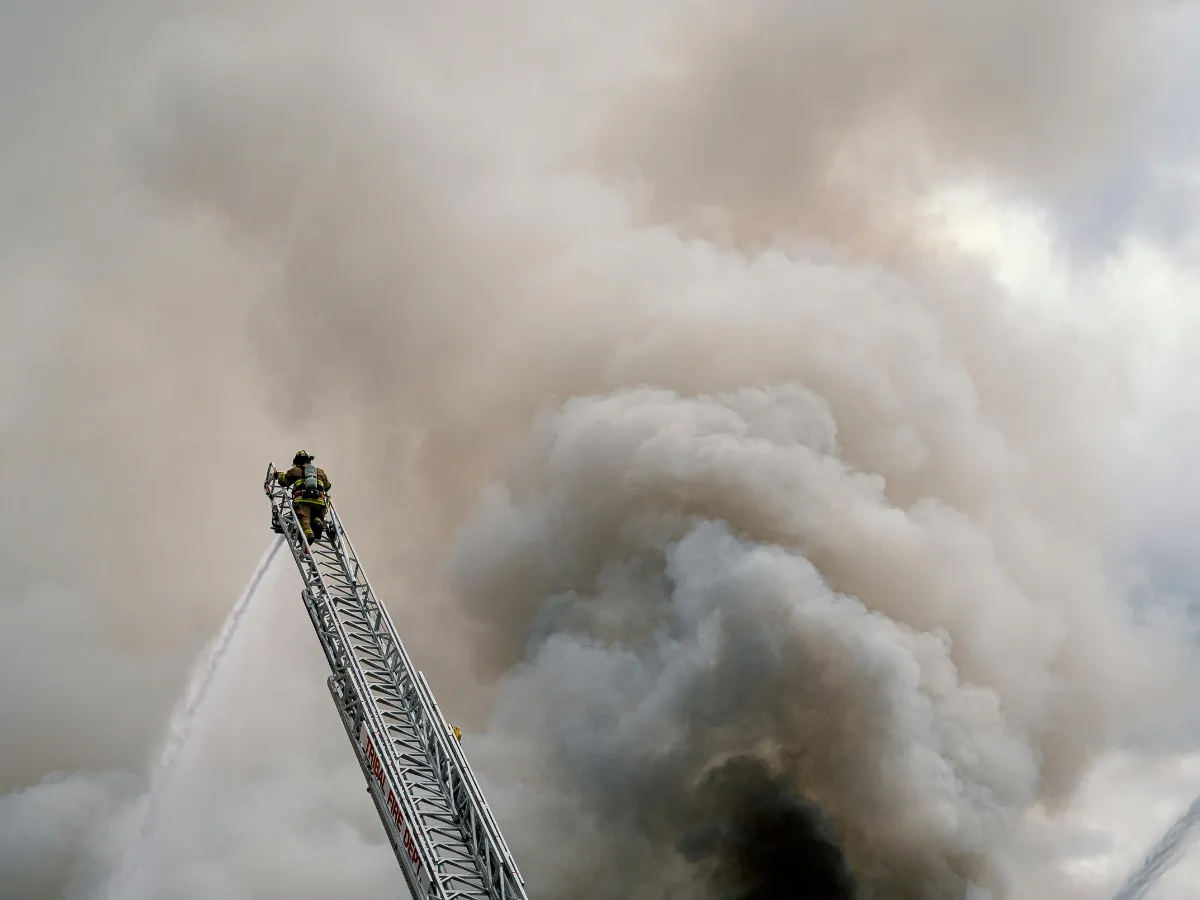
When emergency responders deploy to large-scale natural disasters, they often face more than fire or floodwaters. These events quickly evolve as man-made structures add toxicity and tight operating areas, turning primary threats into long-duration, multi-hazard situations.
One of the most overlooked challenges? Ensuring responders have sustained access to clean, breathable air. This isn’t just a safety issue: it’s a logistical one.
In this article, we examine the complexities of disaster response, the failures of traditional air supply systems to handle them, explore a purpose-built solution, and share how departments can deploy it.
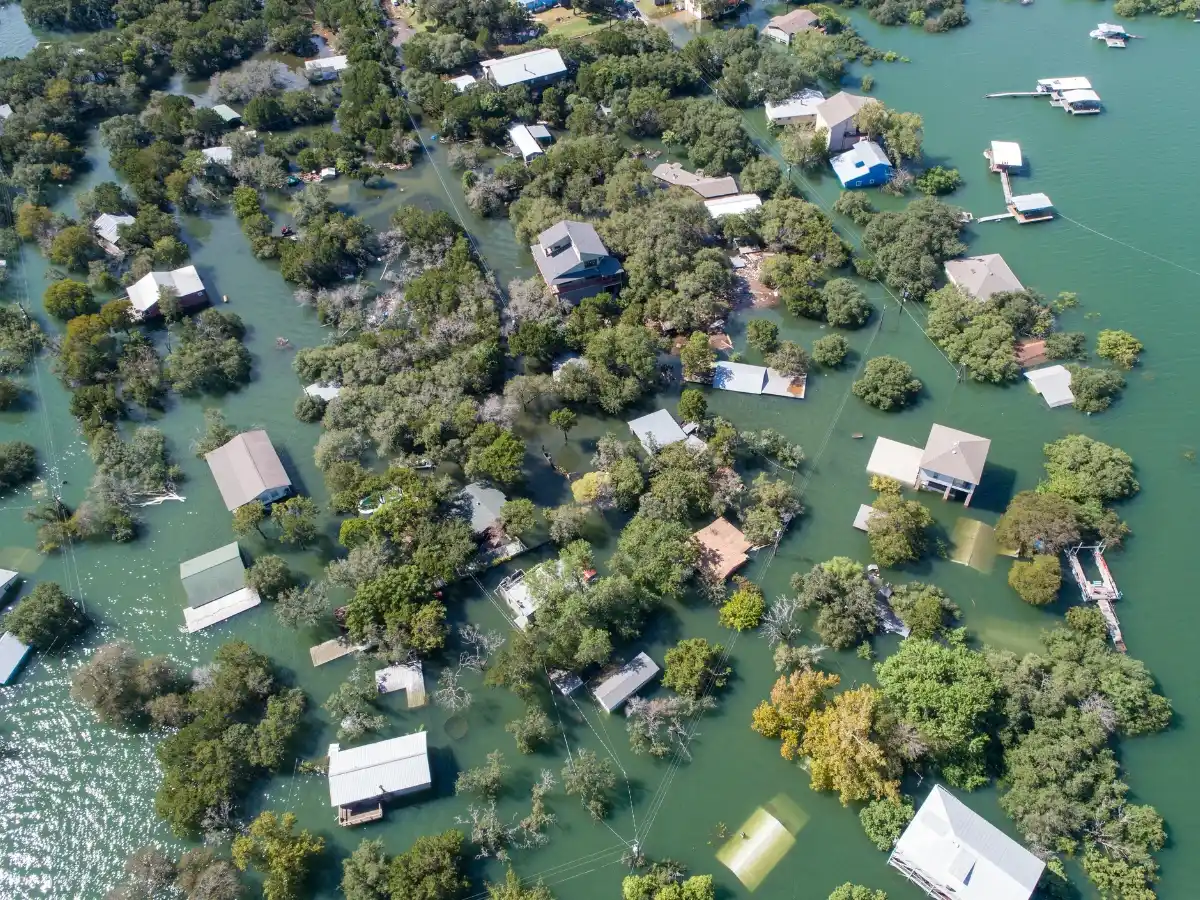
Natural and industrial disasters are becoming more complex, more frequent, and they’re lasting longer. What begins as a wildfire, flood, or explosion often transitions into a multi-day hazardous environment where air quality plummets.
Consider these recent real-world examples:
In every case, responders needed high-pressure breathing air for extended periods. They couldn’t rely on static fill stations.
The challenge was clear: how do you ensure consistent, on-scene breathing air during evolving, multi-day disasters?
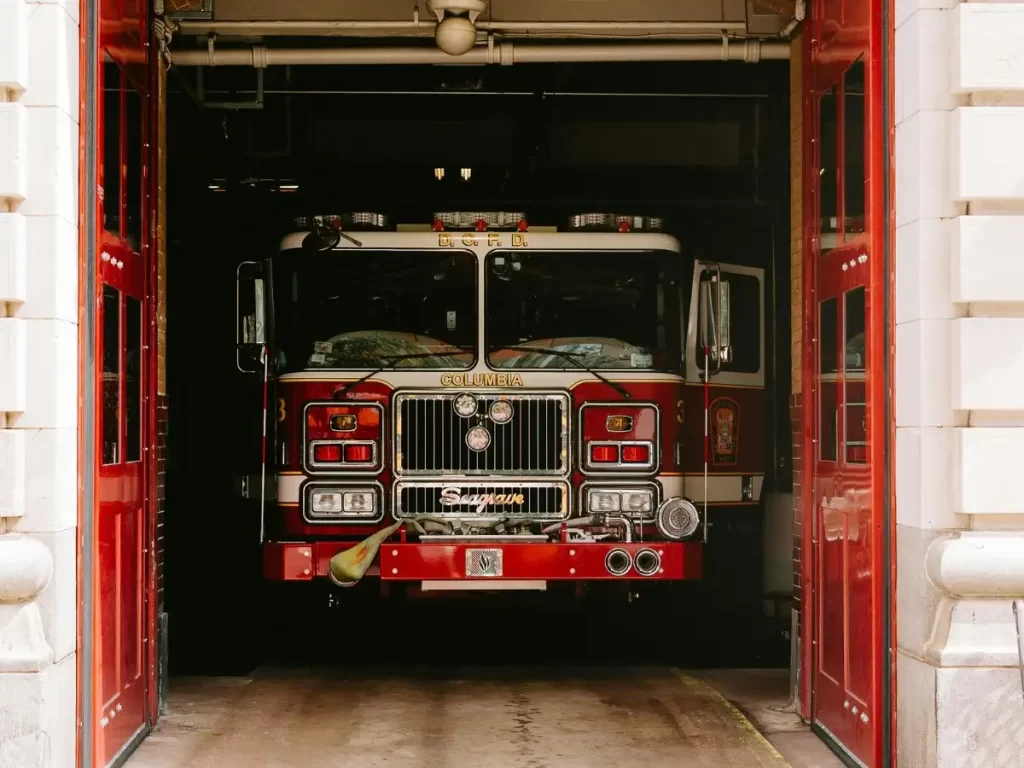
When disaster strikes, conditions rarely stay static. Fires grow. Wind shifts. Roads close. Electricity fails. In these prolonged and unpredictable environments, access to safe, breathable air becomes a logistics problem, not just a safety one.
Emergency teams must stay on-air for hours or days at a time. But how?
During incidents like the Chemtool Fire (2021), fixed air infrastructure was compromised or destroyed. Responders needed refills but had no safe access.
At the ITC Deer Park Fire (2019), teams operated in SCBAs for 15 to 36 hours straight. Without an on-site SCBA compressor, shift rotations would have collapsed under bottle shortages.
In rural areas like East Palestine (2023), only a few SCBA units were initially available. Crews had to ration air in the early hours, a dangerous delay when toxic smoke was already overhead.
Flooded zones in Texas (2025) required public safety divers to operate in contaminated waters using SCUBAs. Without nearby refill stations, divers had to return to distant bases, slowing rescue timelines.
These scenarios show that the question isn’t “Do we have enough air?” It’s “Can we get air where and when we need it most?”
As both natural disasters and complexities around them rise, evaluating a mobile breathing air solution is paramount.
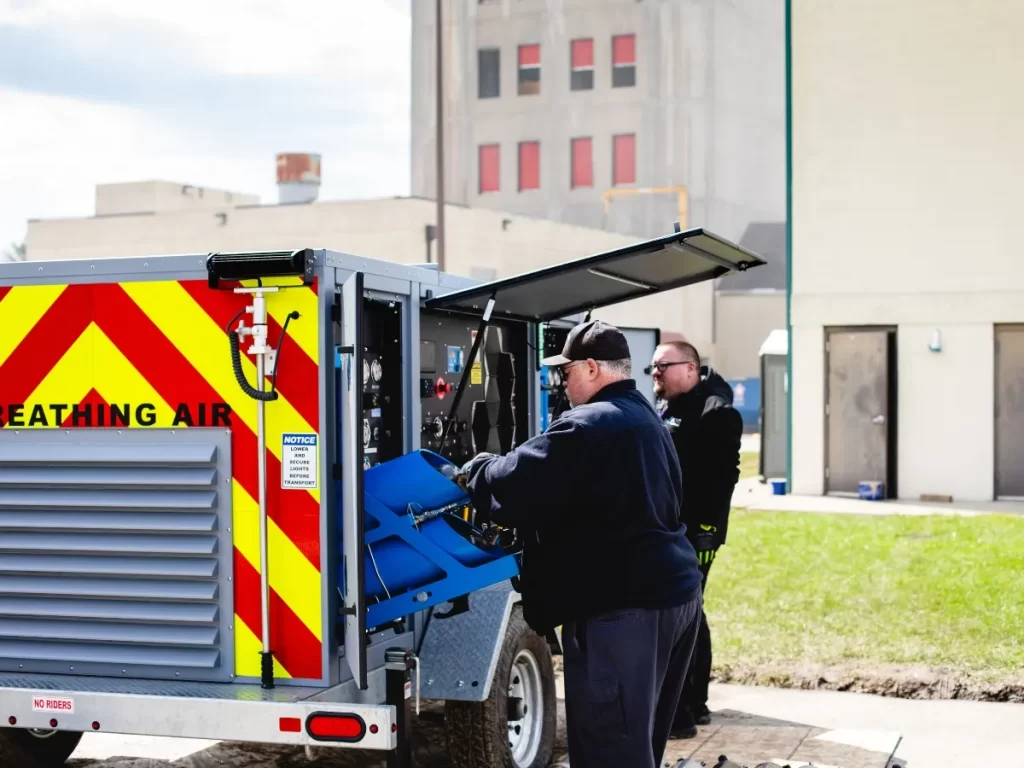
Many departments are deploying the ALL POWER Mobile Air Trailer in their fleet. Arctic Compressor designed this trailer to meet the exact challenges faced by modern responders. It brings high-pressure SCBA and SCUBA refill capabilities directly to the scene, eliminating reliance on stationary stations.
With this mobile SCBA compressor solution, departments can:

If your station lacks dedicated funds for a mobile breathing solution, funding help is available.
Need help scoping your needs? Arctic’s team specializes in mobile breathing air support for emergency response planning. We’ll assess operational gaps and customize a solution setup for your needs.
Already budgeting? Let’s get you specs, lead times, and pricing options.
A mobile breathing air trailer is a towable unit equipped with a high-pressure air compressor, storage cylinders, and SCBA/SCUBA refill capabilities. It enables safe air access during on-scene operations.
Disasters often disable or isolate fixed infrastructure. Cascade systems run out quickly and require external air delivery. Arctic’s trailer provides independent, high-volume air wherever you need it.
Hazmat teams, fire departments, dive units, industrial brigades, and regional response groups across the U.S. use mobile breathing air systems for structure, chemical, and flood events.
Yes. Units are configurable to support firefighting, hazmat, and underwater operations simultaneously.

Response teams’ needs must evolve with their environment. Mobile breathing air systems are no longer a luxury. These innovations are a necessity for modern emergency services, industrial safety teams, and dive operations. These systems deliver life-sustaining air when and where it’s needed.
As the mobile breathing air compressor solutions evolve with innovations in electrification, automation, and compliance, organizations should prioritize systems that combine reliability with future-forward engineering.
Contact our team and discover how Arctic Compressor’s ALL POWER Trailer exemplifies emergency response readiness as the future of safe, mobile breathing air delivery.