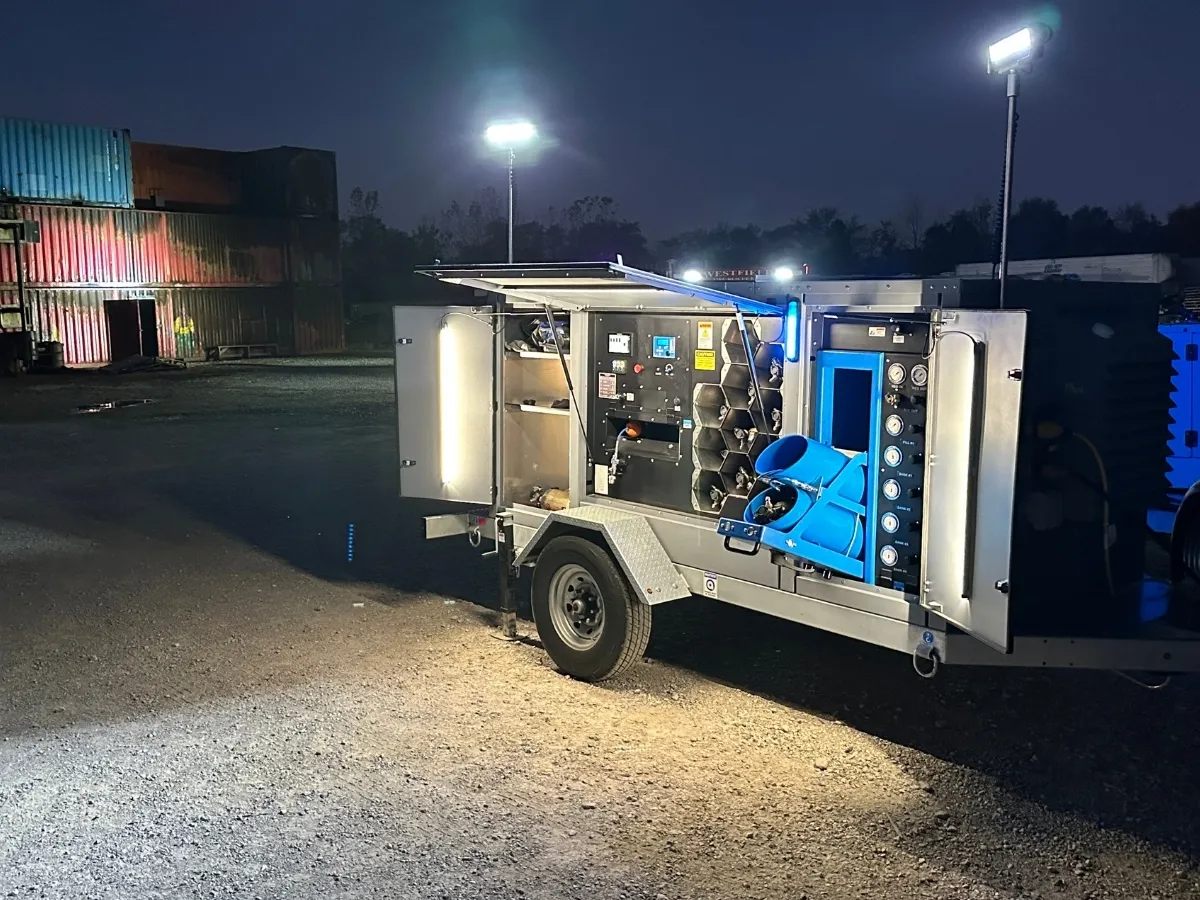
In high-stakes environments where every breath counts, having immediate access to clean, high-pressure breathing air is essential. Mobile breathing air systems deliver SCBA- or SCUBA-grade air where stationary refill stations can’t.
Unlike industrial compressors, mobile systems are designed for short-duration, high-demand SCBA refills, like training, structure fires, and dive/rescue operations. They offer portability, speed, and reliability in challenging environments.
In this article, we will cover:
Want to understand the ins and outs of a breathing air compressor? Read our Breathing Air Compressors Guide.

A mobile breathing air system is a self-contained, high-pressure compressor setup that produces CGA Grade D or higher air purity for SCBA and/or SCUBA cylinders. Standard pressures are between 4500–6000 PSI.
Mobile systems are often mounted on a trailer or a truck. This enables on-scene cylinder refilling during emergencies – simplifying your operations. According to Fire Apparatus Manufacturers’ Association (FAMA), mobile units combine two or more major components for SCBA refilling, like a compressor and fill station.
The design should emphasize

A mobile breathing air unit integrates several critical technologies:
Things to consider:
Breathing air compressors deliver high-pressure output (4500–7000 PSI) with air flows typically between 14 and 35 CFM. Most operate intermittently, and feature built-in cool-down technologies.
Things to consider:
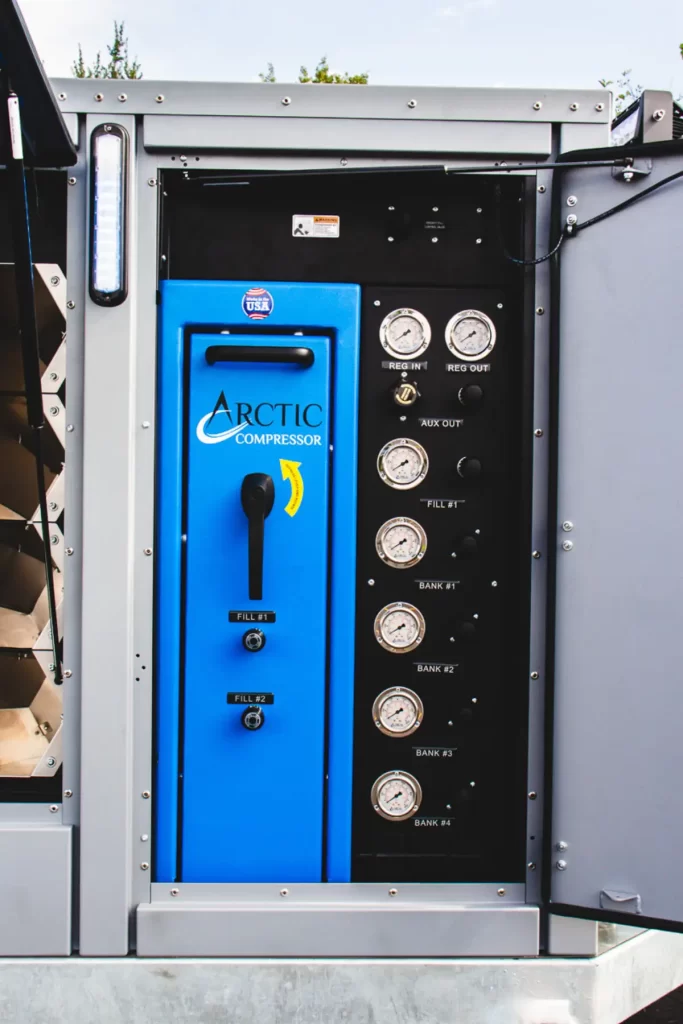
Fill stations are built for cylinder refills, but they should also have advanced safety and control features. Enclosures often meet NFPA 1901 requirements, providing blast protection and ergonomic controls. Some units include dual-fill positions and integrated safety interlocking to protect the operator during cylinder filling.
Things to consider:
To optimize air delivery, breathing air systems use multiple storage banks at staggered pressures called a cascade system. This setup allows for efficient air transfer while minimizing the compressor load.
Things to consider:
Options include:
While traditional fuel-powered systems are common for field operations, electrified systems are gaining ground due to zero emissions and low-noise operation.
Arctic Compressor’s ALL POWER Trailer is a leading example of battery-electric performance in mobile air delivery, providing high-output pressure without the emissions of diesel-based platforms.
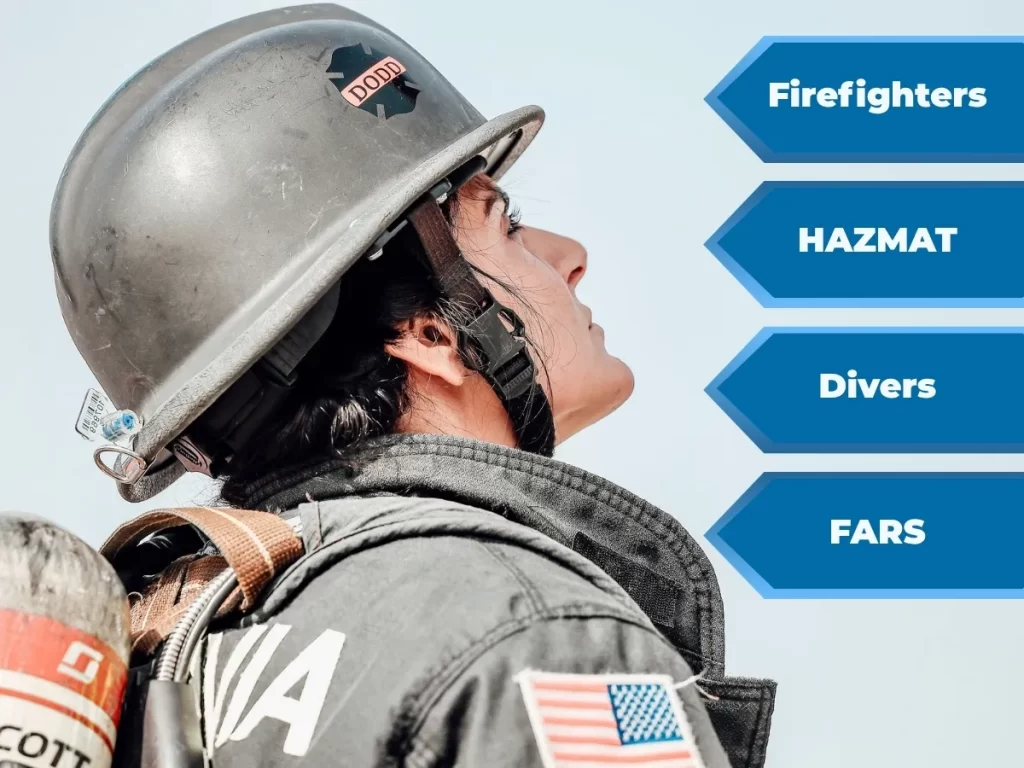
Common Uses:
Air supply logistics can be life-saving. Mobile systems enable quick cylinder refills on-scene without needing to return to base.
Rural fire departments often rely on mobile systems due to infrastructure limitations. For example, grain bin rescue trailers in agricultural communities now include breathing air systems to support confined-space rescues in remote areas.
Common Uses:
Extended operations in contaminated or confined environments require constant air replenishment. The Milwaukee Fire Department’s Tier 1 HAZMAT Team deploys mobile units for sustained air support during chemical response events.
Common Uses:
Diving teams need mobile systems that can support both SCUBA and SCBA cylinders. The Wilmette Fire Department uses mobile air to support both shoreline operations and boat-based dive teams.
Common Uses:
Departments like Bexar County ESD 2 use mobile units capable of supporting fireground, EMS, and rescue operations from a single trailer-mounted platform. These units are often configured with multiple cylinder fill positions, cascade storage, and lighting for night operations.
Buildings equipped with Firefighter Air Replenishment Systems (FARS) require external mobile air sources. Mobile trailers connect directly to FARS inlet panels, supplying air to internal piping and allowing extended interior operations without bottle shuttling.
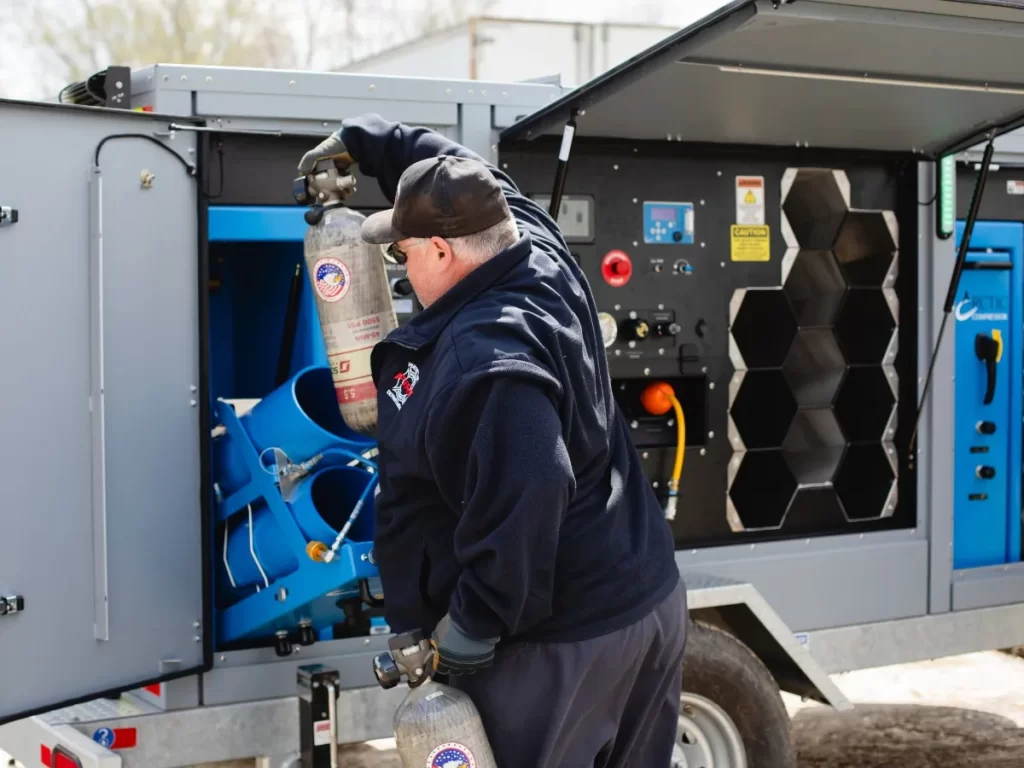
Mobile systems vary in size from truck-mounted to trailer-mounted setups. The trade-off between portability and capacity should align with deployment strategy.
Traditional diesel systems emit fumes that can be hazardous in enclosed spaces. Arctic Compressor’s ALL POWER Mobile Air Trailer, powered by LiFeP04 batteries, provides quiet, zero-emission performance.
Mobile systems should be low-maintenance. Newer innovations include units with auto-cascade fill stations, reducing the need for manual oversight and training.
Establishes standards for air purity including CO limits (5 ppm max) and oxygen levels (19.5–23.5%). Systems must undergo quarterly lab testing and shut down automatically if tests fail.
Defines equipment requirements for breathing air systems mounted on emergency vehicles, including fill station design and cylinder protection standards.
Requires Grade D breathing air, routine air sampling, and user documentation for workplace safety compliance. These apply to fire, rescue, and industrial environments alike.
Always plan for maximum cylinder throughput during extended responses. Choosing a system based on average daily use rather than peak demand can lead to serious limitations during large-scale incidents.
In confined spaces or municipal environments, diesel-based systems may pose safety risks or violate emissions guidelines. A battery-electric unit may be more appropriate.
NFPA 1989 mandates quarterly testing and documentation. Choosing a system without integrated air quality monitors or sample ports may increase compliance risks.
Opting for systems from overseas manufacturers may introduce long lead times for service and parts. American-made systems, such as those from Arctic Compressor, offer faster delivery and local support, ensuring uptime during critical operations.

Response teams’ needs must evolve with their environment. Mobile breathing air systems are no longer a luxury. These innovations are a necessity for modern emergency services, industrial safety teams, and dive operations. These systems deliver life-sustaining air when and where it’s needed.
As the mobile breathing air compressor solutions evolve with innovations in electrification, automation, and compliance, organizations should prioritize systems that combine reliability with future-forward engineering.
Contact our team and discover how Arctic Compressor’s ALL POWER Trailer exemplifies emergency response readiness as the future of safe, mobile breathing air delivery.