Expert Advice / Mobile Solutions
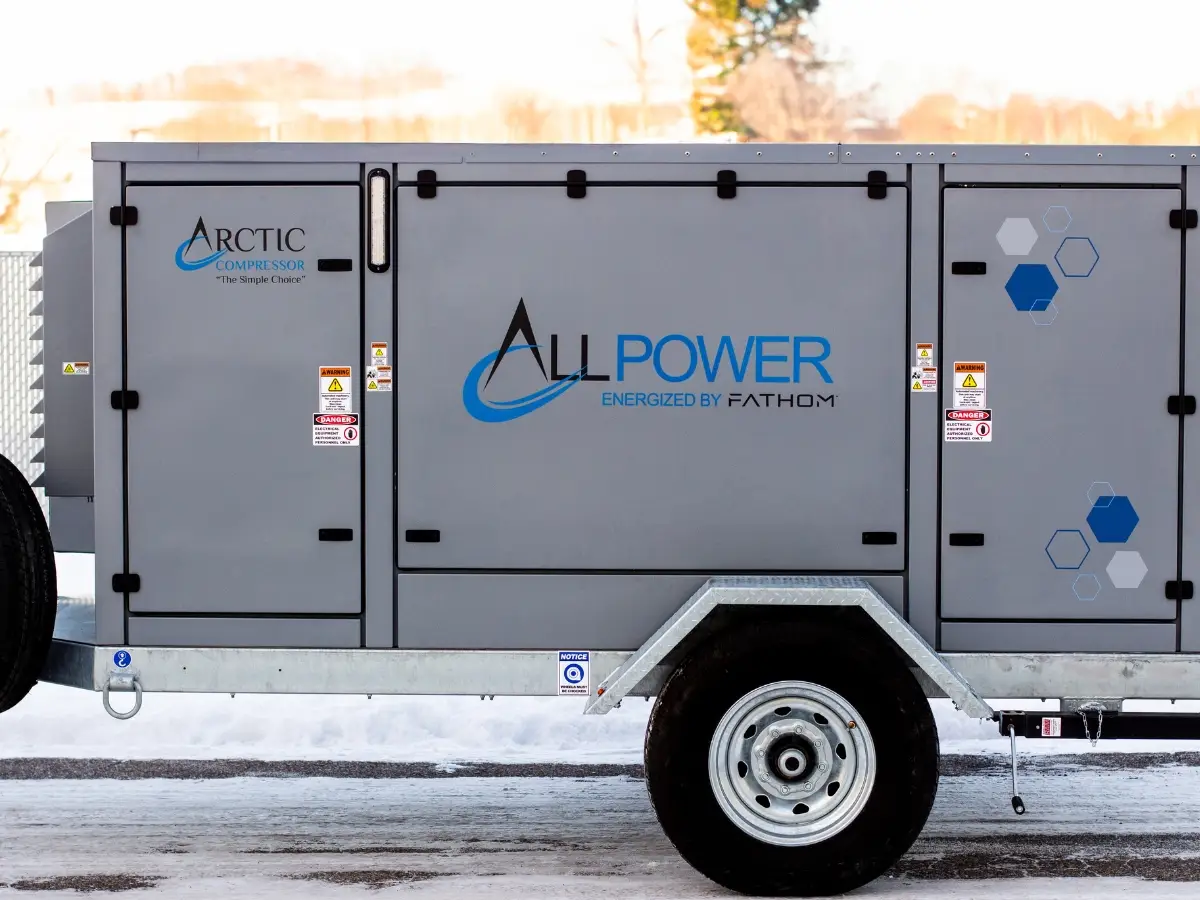
Selecting a breathing air trailer requires balancing NFPA compliance, tow vehicle capacity, and on-scene SCBA/SCUBA cylinder turnover rates. This guide defines:
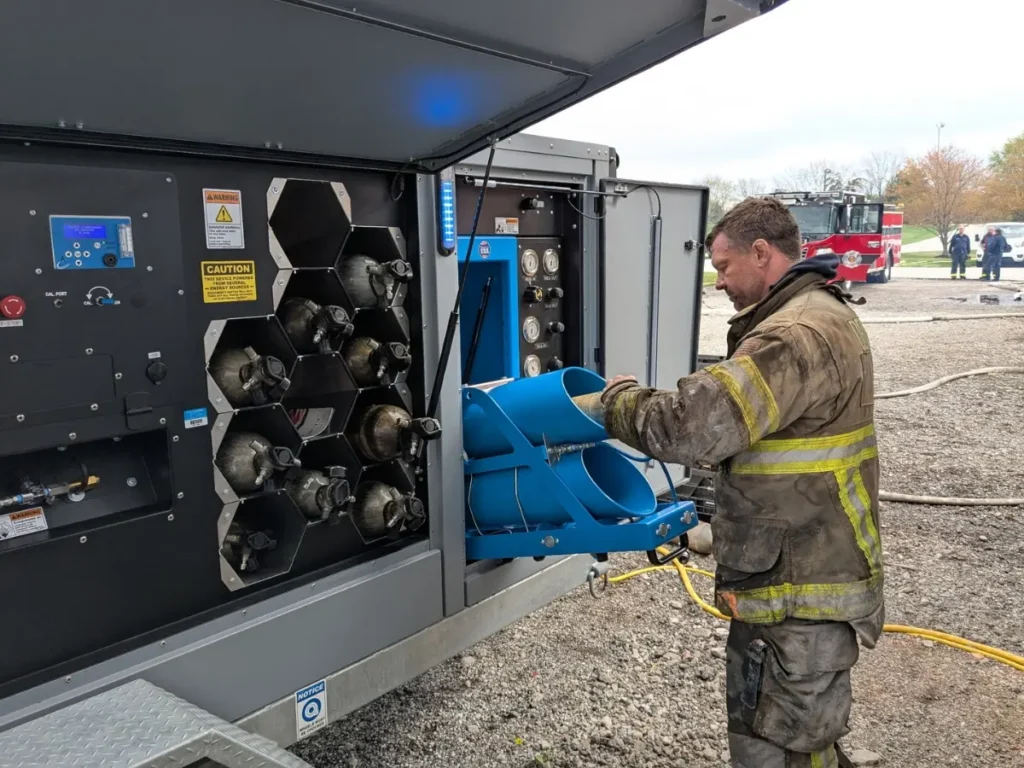
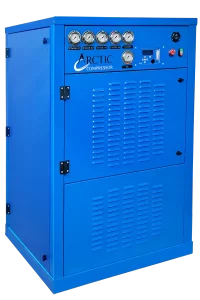
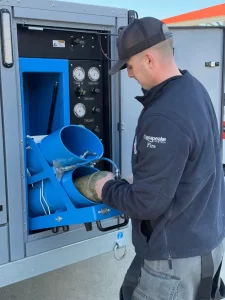
In short, a breathing air trailer is a mobile cylinder-refilling station that provides high-pressure, purified air at remote emergency scenes. Unlike stationary systems, these trailers integrate a breathing air compressor, a multi-cylinder containment fill station, and a large-volume air storage system (cascade) into a towable solution.
For fire departments and training facilities, breathing air trailers serve as a self-sufficient air source – capable of refilling SCBAs ranging from 2216 PSI to 5500 PSI – without returning to the station.
Every mobile air unit must comply with applicable federal and national standards to ensure personnel safety and air quality.
When evaluating a breathing air trailer, avoid the mistake of over-prioritizing compressor size while neglecting storage volume.
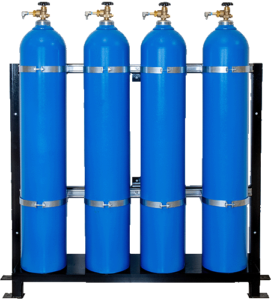
A 24 CFM compressor is highly efficient, but on-scene speed is determined by your cascade capacity. A standard 4-cylinder ASME cascade system stores approximately 1760 Cu. Ft. of air. This allows you to fill roughly 18-20 4500 PSI bottles before the compressor begins to “catch up.”
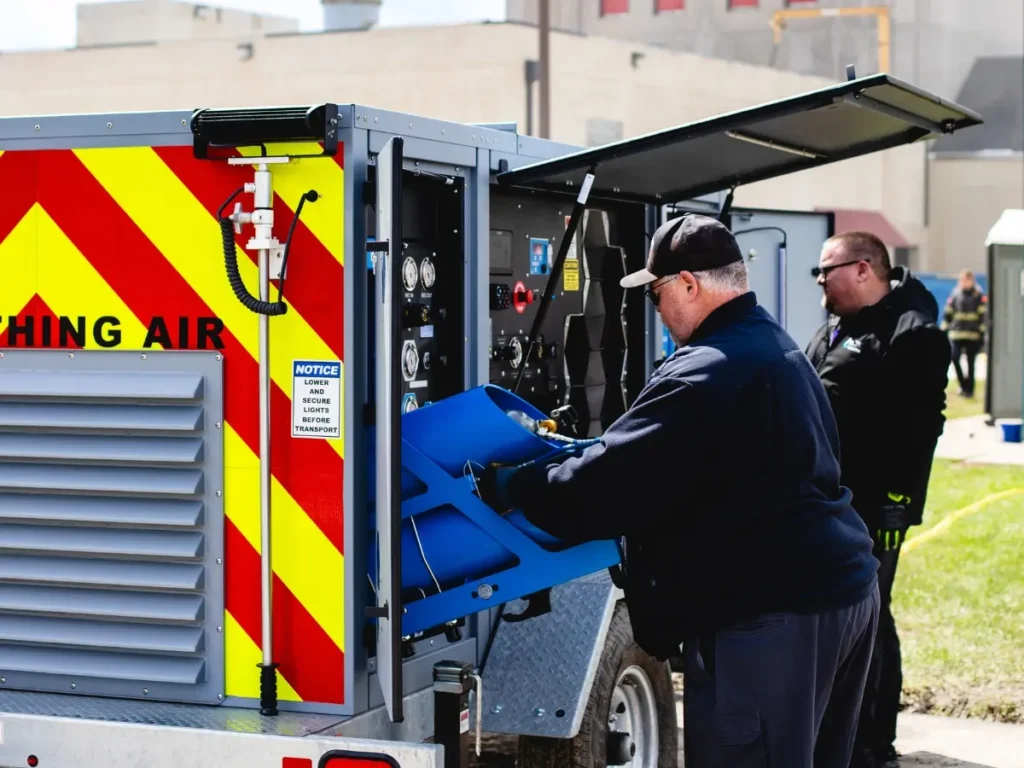
Modern fleets often mix legacy 2216 PSI equipment with new 5500 PSI cylinders. Specify a trailer with dual-bank regulators to allow simultaneous filling of different pressure ratings without the risk of over-pressurization.
The current industry average for custom mobile units can exceed 12 months. Choosing American-made breathing air trailers with centralized manufacturing in Wisconsin can reduce lead times by up to 9x compared with those that rely on overseas components.
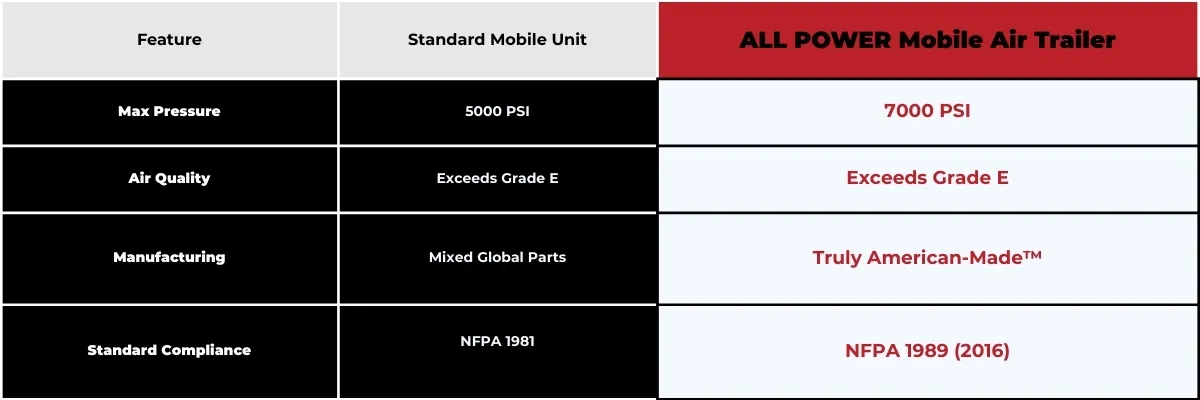
Yes. Arctic Compressor offers the competitive and all-electric ALL POWER Mobile Air Trailer.
The ALL POWER Mobile Air Trailer not only meets but exceeds CGA Grade E breathing air standards, setting it apart in it’s class.
No. The ALL POWER Mobile Air Trailer is electrically powered only through advanced and safe battery technology (LiFeP04).
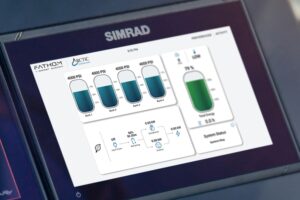
Yes. The ALL POWER Mobile Air Trailer comes with an integrated Arctic CO Monitor.
No. The ALL POWER Mobile Air Trailer is powered by Lithium Iron Phosphate (LiFeP04) batteries, a much safer and more stable battery type than lithium-ion.